I. Development History of Metal Extrusion Technology
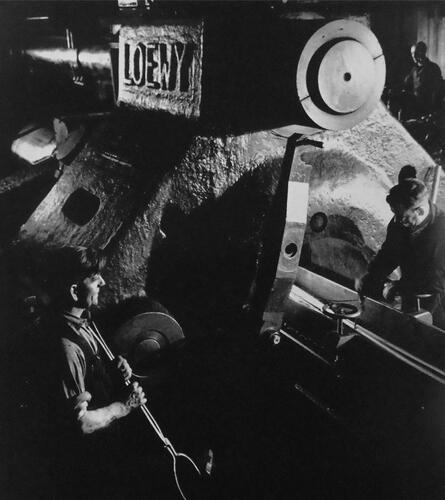
The earliest hydraulic extrusion equipment was developed in England in 1810 by J. Bramah, initially for lead extrusion. In the 1890s, German engineer A. Dick optimized the extrusion technology, extending it to the processing of high-melting-point alloys.
Dick's key improvement was the separation of the pressure disc from the push rod and valve stem structure, allowing for the simultaneous ejection of extruded waste and pressure disc. This design was a significant breakthrough in extrusion technology, effectively promoting the design, processing, and industrial application of hot-work steel extrusion equipment, laying the foundation for modern extrusion processes.
II. Basic Principles of Metal Extrusion Process
Metal extrusion is a commonly used metallurgical plastic deformation process, capable of mass-producing long metal semi-finished products such as pipes, bars, profiles, and cables. The process primarily uses high-temperature extrusion, preheating the billet, with the processing temperature adjusted according to the alloy material and process type.
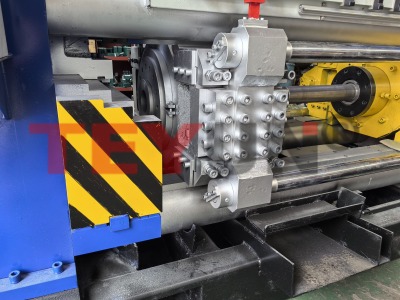
Its core principle is: the preheated billet is placed in a sealed extrusion container, and axial pressure is applied by a hydraulic piston and pusher head, forcing the billet to be extruded from the die orifice, reducing the cross-sectional size to form the target component. The load is evenly distributed across the entire extrusion fixture.
III. Mainstream Extrusion Process Types and Characteristics
1. Direct Extrusion (Forward Extrusion)
In direct extrusion, the preheated billet is pressed against the cylinder wall and shortened in length within the cylinder. It is then pushed through the die by the extrusion rod to form the final product. The most significant characteristic of this process is the relative sliding between the billet and the extrusion cylinder, generating frictional resistance during processing.
The axial extrusion force in direct extrusion must simultaneously overcome cylinder wall friction and achieve plastic deformation of the metal. Pressure changes occur in three stages: the initial pre-compression pressure rapidly rises to its peak; during the stable extrusion stage, friction decreases and the pressure gradually decreases; and at the end, when scrap is extruded, the pressure surges again.
2. Indirect Extrusion (Reverse Extrusion)
Indirect extrusion also involves pre-fixing the billet. During operation, the die advances with the piston rod, and the billet is formed through the hollow valve rod die hole. In this process, the billet and the extrusion cylinder move synchronously without relative sliding, resulting in no frictional resistance throughout the process.
Compared to direct extrusion, reverse extrusion pressure can be fully utilized for material deformation, resulting in higher energy efficiency. Furthermore, the metal flow is uniform, effectively eliminating defects such as shrinkage cavities and voids at the extrusion end, leading to superior product quality and stability.
IV. Core Parameters of Extrusion Process
1. Specific Pressure: Specific pressure refers to the working pressure inside the extrusion cylinder liner. It is a core indicator for determining equipment load and process feasibility. The calculation formula is: Ps = Fp/Ac (where Fp is the hydraulic press output extrusion pressure, and Ac is the cross-sectional area of the through-hole in the extrusion cylinder liner).
2. Extrusion Ratio: The extrusion ratio is a key parameter affecting extrusion pressure and processing difficulty, directly related to production quality and efficiency. The calculation formula is: ER = Ac/Ae (where Ac is the cross-sectional area of the through-hole in the extrusion cylinder, and Ae is the cross-sectional area of the die forming hole). The higher the extrusion ratio, the higher the material deformation and the required extrusion pressure.


 Address : NO.7 Huihe Road, Qianzhou Industry park, Huishan District, Wuxi City, China



 IPv6 network supported