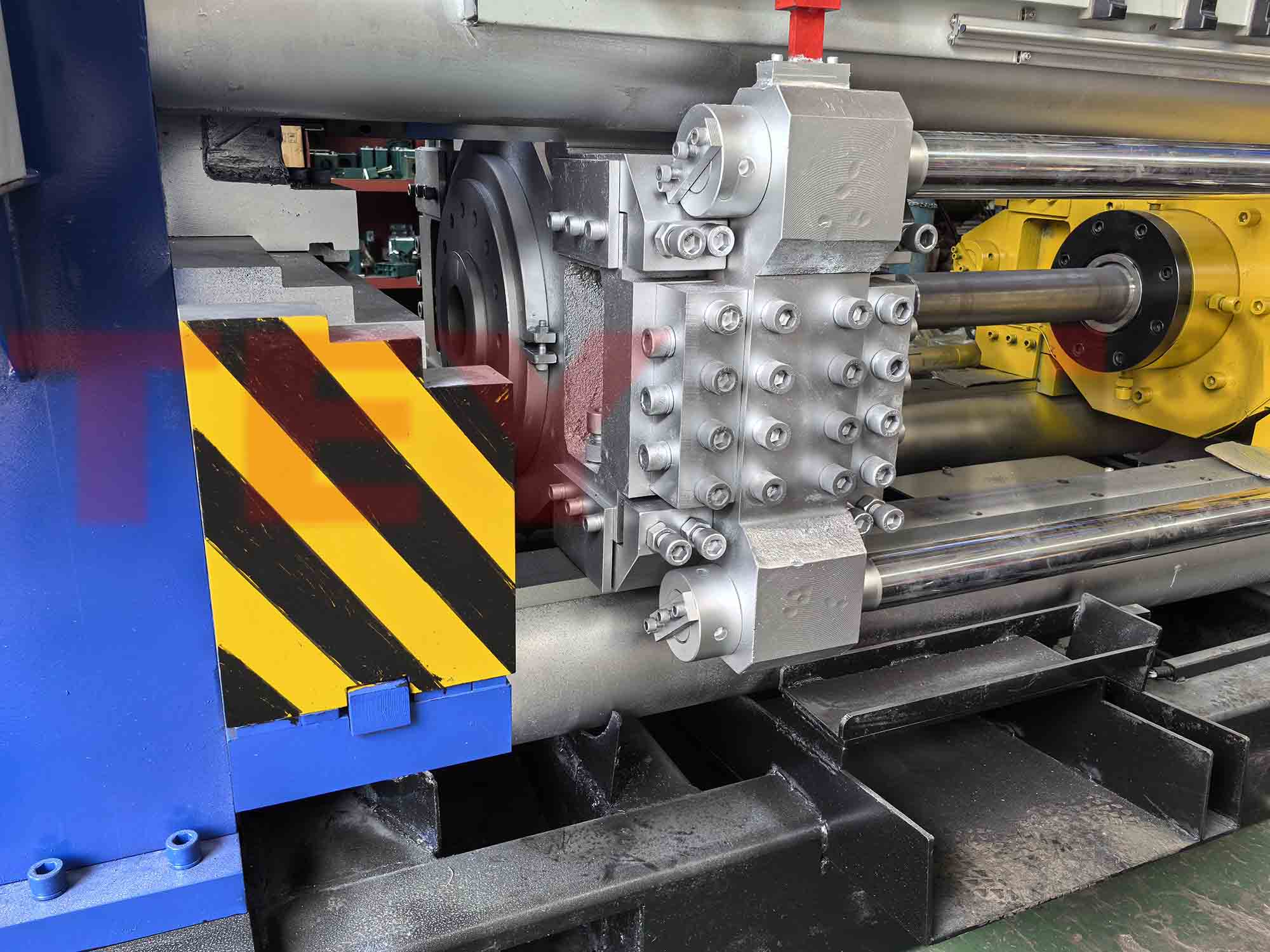
All aluminum alloys can be extruded, but several factors need to be considered when determining whether a particular part can be successfully extruded. These include dimensions, shape, alloy, tolerances, scrap rate, extrusion ratio, and tenon-to-tongue ratio. It also depends on whether you should use forward or reverse extrusion for production.
Forward extrusion is the most commonly used process in the extrusion industry. It is simpler in design and more flexible in profile manufacturing.
The benefits of reverse extrusion (often called reverse die extrusion) include reduced friction and improved consistency. Enhanced consistency manifests in the dimensions and metallurgical structure along the length of the extruded profile. Reverse extrusion is used to achieve more consistent machinability, for example, through a more consistent metallurgical structure in bars and bar products. Enhanced dimensional tolerances are helpful for bars used as screw extruder blanks.
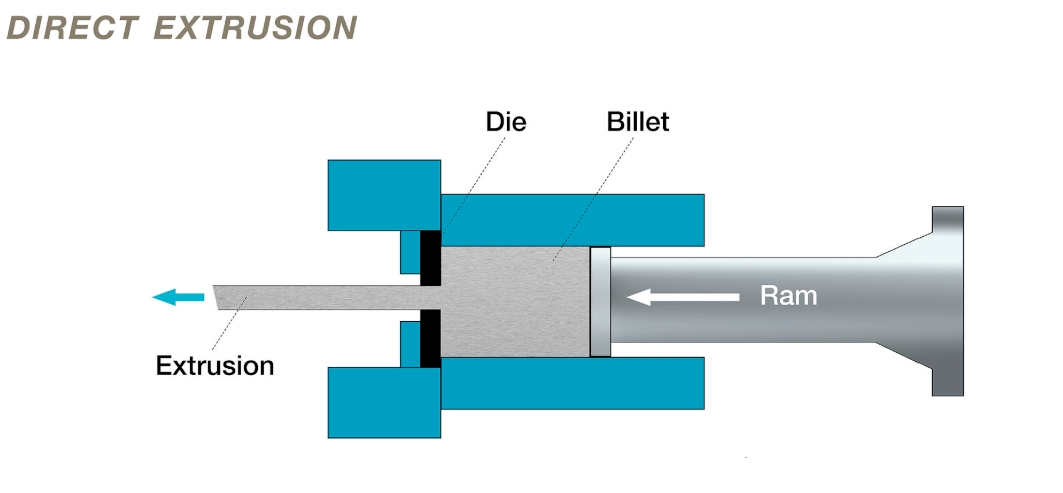
Forward Extrusion: In forward extrusion, heated aluminum blanks are pushed by a cylinder head through a fixed die to form a specified shape. The aluminum flows in the direction of the plunger's travel, generating friction between the blank and the container. This increases the workload during the extruder cycle, resulting in increased temperatures before and after the extruder. This variation in workload and temperature along the extrusion length leads to changes in the metallurgical structure along that length. Temperature variations and increased work along the length affect the grain structure and microstructure, which are important for machinability. Dimensions are affected by the pressure on the extrusion die, which decreases during the extrusion cycle. The pressure is highest in the indirect process at the beginning of the extrusion due to the additional force required to overcome the pressure.
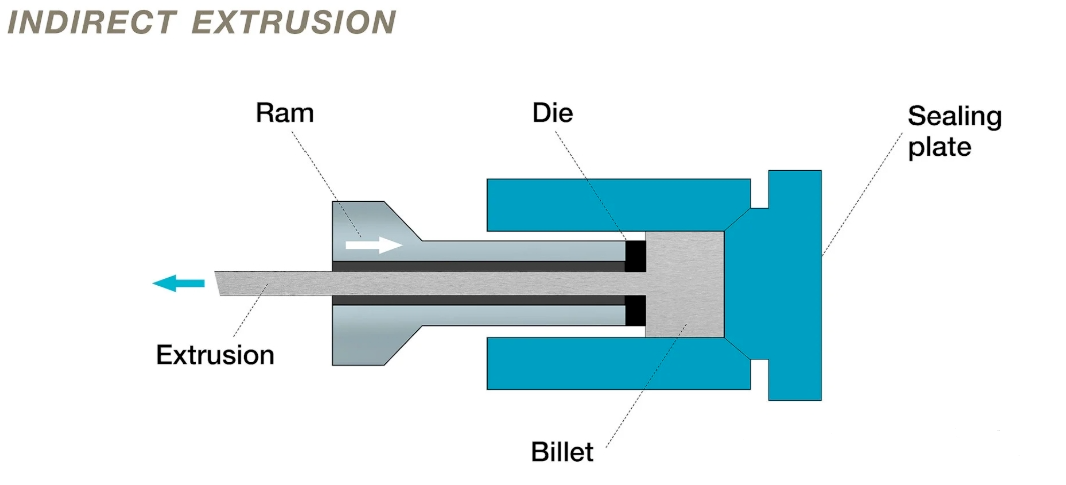
Reverse Extrusion
In a forward extrusion process, as described above, the die is stationary, and the extruder applies pressure to the aluminum bar. In reverse extrusion, the extruder head carries the die and applies pressure to the stationary aluminum bar in the opposite direction of extrusion.
This concept can be varied, but in any case, the aluminum bar is stationary relative to the container. Therefore, there is no frictional effect from the billet to the container, and the force during the extrusion process remains relatively constant from the front to the back of the extruded part.
Another advantage is that the workload also remains relatively constant, eliminating friction present in the direct process.
The result of reverse extrusion is a more consistent workload and smaller temperature variations across the entire extrusion length. This provides more consistent dimensions, grain structure, and mechanical properties. The reverse process does have its advantages and disadvantages. For example, since there is no friction, anything on the surface of the aluminum bar will affect the extruded surface. This requires the aluminum bar to have its cast surface layer removed and then kept relatively free of dirt and oil. Another disadvantage is that the die must be supported during extrusion, allowing the extrudate to pass through that support. Therefore, the profile dimensions across the circle diameter are significantly reduced.


 Address : NO.7 Huihe Road, Qianzhou Industry park, Huishan District, Wuxi City, China


 IPv6 network supported